

What Grandma Gatewood Can Teach Us About Whose Stories Get Told
The past few weeks, I’ve been surrounded by stories. Women’s stories. Stories of courage and chutzpah, heartbreak and healing, resilience in the face of adversity. Stories that too often go untold.
And I’ve found myself wondering: How many remarkable women disappear from our collective memory simply because no one makes room for their stories?
Grandma Gatewood’s Story
I make a yearly Sojourn to the LenFoote Inn, a blissful place at the very southern tip of the Appalachian Trail. Proudly displayed in the main room of the Inn are six packs that illustrated how people carried their essentials as they hiked the Appalachian Trail over the decades.
Every day, at the 4 pm tour, the stories of the packs and the people who carried them are told to the guests.
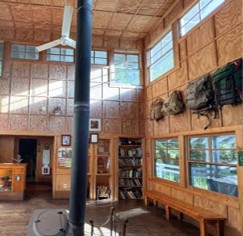
Forgive me. I said people. I should have said men.
For one pack is conspicuously absent: the homemade denim rucksack carried by Emma “Grandma” Gatewood. And what hangs on the wall determines whose story gets told.
You see, carrying a homemade pack and minimal provisions, Emma (AKA Grandma) Gatewood, at the age of 67, was the first woman through-hiker to traverse the entirety of the early Appalachian Trail in 1955. And again – and once more for a total of three times.
On my stay last year, I questioned the staff as to why Emma’s pack was not on the wall and her story told. I received a very polite response from the board chair and an offer. They would purchase the book recounting her life and contribution to the trail. And if I returned, I could share her story. And so this year, I told her story to those who cared to listen.
And so I did.
I told the story of a mother of eleven who survived a brutally abusive marriage. A woman who read about the Appalachian Trail in a 1949 National Geographic and thought she might like to walk it. A 67-year-old grandmother who set off with little more than a homemade sack, a blanket, some food, and an astonishing amount of grit.
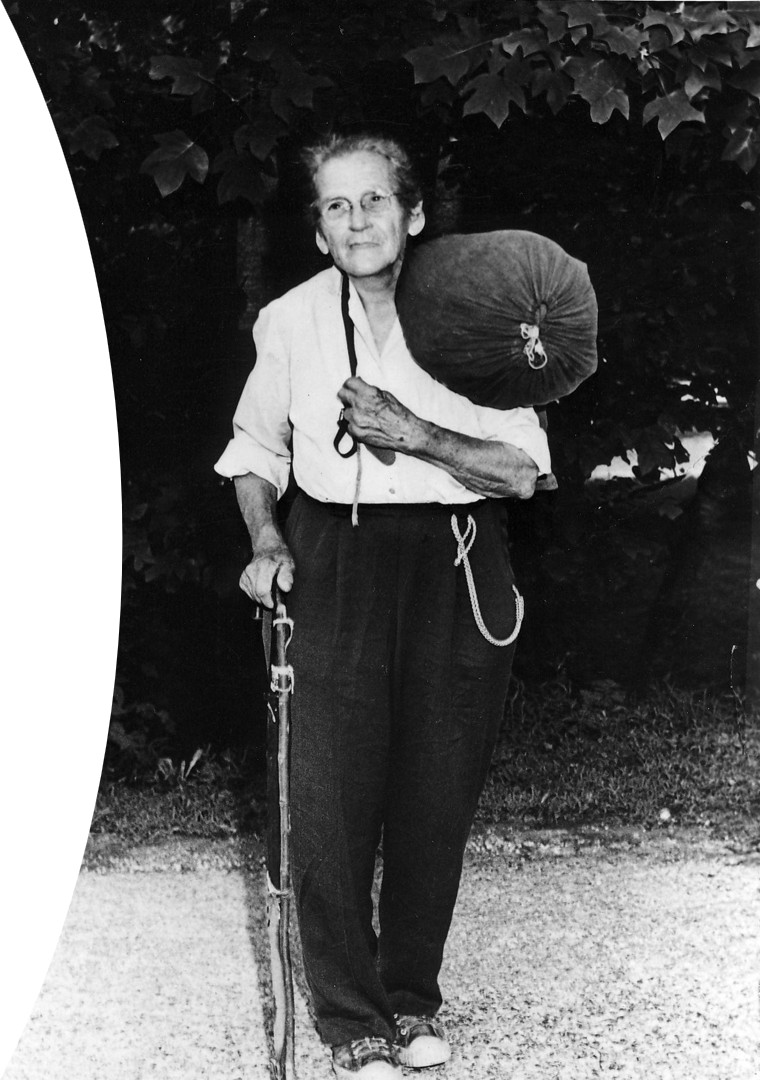
As the press caught wind of her “just taking a walk” in her parlance, they began to follow her incredible journey from GA to Maine in 1955. All 2,050 miles. As she was interviewed, she, in her plainspoken way, was truthful about the state of the trail (opened seven years prior), which was not properly cleared, was poorly marked, and definitely without the shelters promised every 20 miles to rest in.
Not only did Grandma Gatewood set records, as her story reached others, but she also changed the trajectory of the Appalachian Trail. More people were interested. The flaws she spoke so clearly about were corrected and the trail was greatly improved.
The trail got better because Emma walked it. But it also got better because her story was told.
Grandma Gatewood didn't set out to become a symbol or loudly proclaim her accomplishments. She simply walked. And when people asked about what she encountered, she told the truth.
That combination—quiet courage and unvarnished honesty—helped inspire countless people to walk in the woods and helped make the trail better for those who followed.
Grandma Gatewood’s journey is a tale worth telling—and a life worth celebrating.
As much as I loved sharing the story of Grandma Gatewood and her walk, I noted that I had told the story to only a handful of people, for there was still not a pack representing her contributions on the wall. Her story wasn't being shared with ALL the visitors to the Inn, only the ones who happened to be there the day I presented.
Yet, after the talk, I was heartened to find that one of the staff members also did a presentation on Grandma Gatewood, which he offered multiple times throughout the year.
And even more encouraging, the newest staff member vowed to do more research on her story so that he too might begin to share it. And the stories of other women like her.
And perhaps that is how stories find their way back into the world. One person tells another. Someone becomes curious. Someone asks a question. Someone refuses to let a story disappear.
Not a total victory. But progress.
I was there leading a Sojourn – and during our 3 days together, the stories from the women who journeyed with me spilled out. Individual stories – of pain and of triumph. Joys and sorrows. Sad stories alongside silly stories.
Our own stories alongside those of our mothers and our grandmothers and aunties who faced hardships, who overcame sorrow, who did what was needed for their families and neighbors and friends.
Those stories didn't emerge by accident. We made room for them. We gathered. We listened deeply. We treated each story with care. And perhaps most importantly, we resisted the urge to answer someone else's story with one of our own.
We simply listened.
We breathed.
We let the stories land.
It struck me that we all have stories worthy of telling. Yet far too often, the stories of women go untold. For often they are not flashy – but they demonstrate an inner resilience that is unrelenting.
Yet these intimate stories are easy to lose in a busy, distracted, digitized world. They survive only when we make time to tell them—and time to listen.
So make some space for stories. Turn off the television. Put away the devices. Ask your mother. Your grandmother. Your auntie. Your friend. Ask about the courage no one noticed, the choices no one celebrated, the hard things they survived and the lives they quietly changed.
And then listen.
Because stories are more than memories. They are roadmaps. They tell us where we've been and remind us what might be possible.
Not every remarkable woman will have her backpack hanging on a wall.
But every one of us can help make sure her story doesn't disappear.
You're invited to subscribe to Ripples a soulful weekly newsletter crafted to nourish your inner knowing and spark meaningful insights. Each issue includes a short musing, reflection questions, and handpicked resources for your journey. If you're ready to reconnect, reflect, and rise in community with other spirit-led women, join us—and let the ripples begin.
Join my Ripples Newsletter
Exploring the places that tend to silence us: the Patriarchy at Work, at Home, at the Doctor’s Office, at the Gym, at Church or at the Car Dealership.
Read this musing
As humans, we do these three things: We make up “stories” or versions of our truth using only our viewpoint and with limited and biased data. We assume our stories are factual, that we are right. We craft stories that put us in the best possible light. The stories don't always serve us - here is how to know!
Read this musing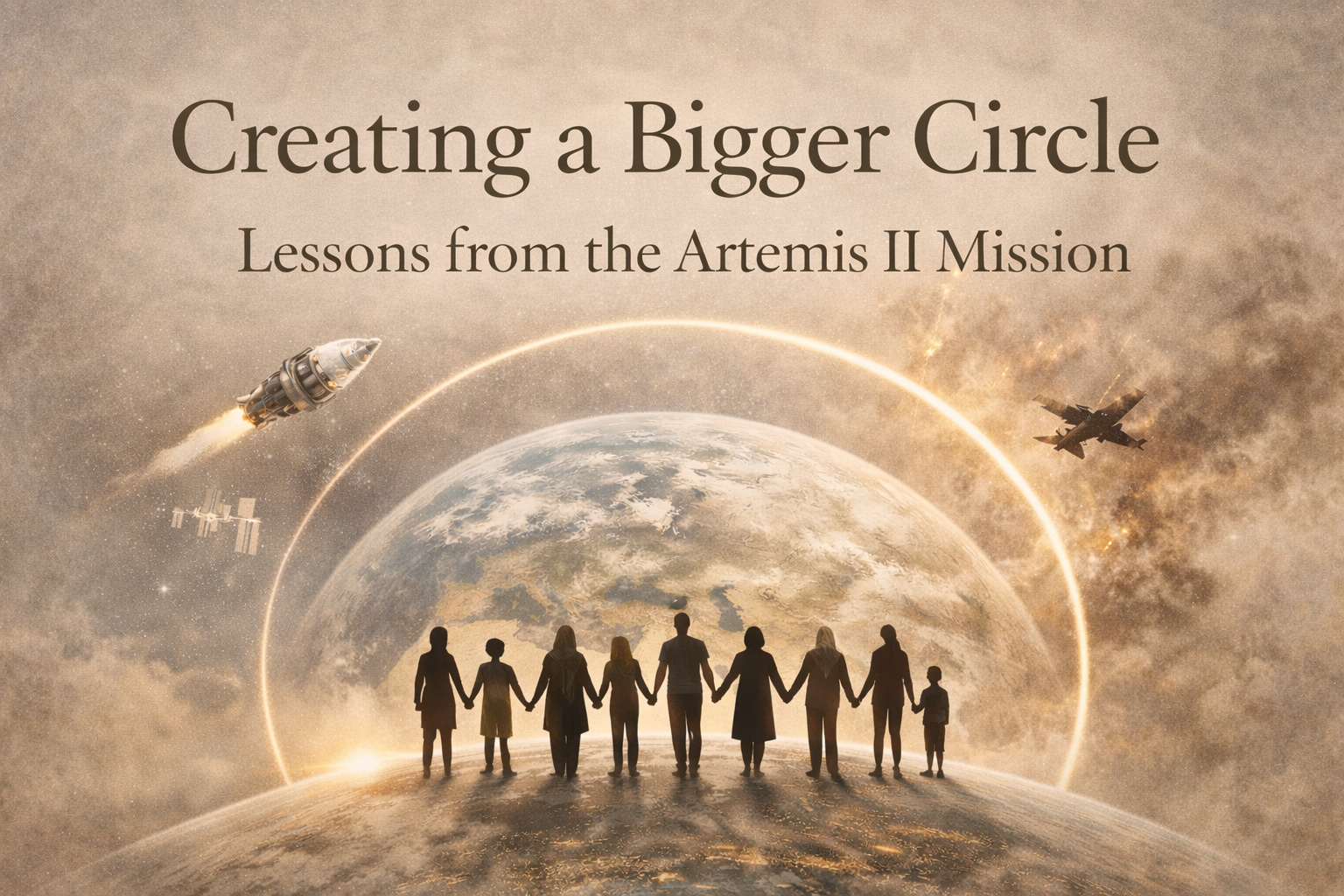
This musing contrasts the divisive rhetoric and fear-driven leadership on Earth with the unifying perspective of the Artemis II mission, reminding us that from space, humanity shares one interconnected home. The crew of the Artemis calls us to move beyond “us vs. them” thinking. What can we do to consciously choose love, compassion, and collective responsibility to help tip the world toward a more inclusive and hopeful future?
Read this musing
Receive weekly insights from my years of lived experience as a creative, entrepreneurial woman stepping into my gifts and passions.
Join my Ripples Newsletter