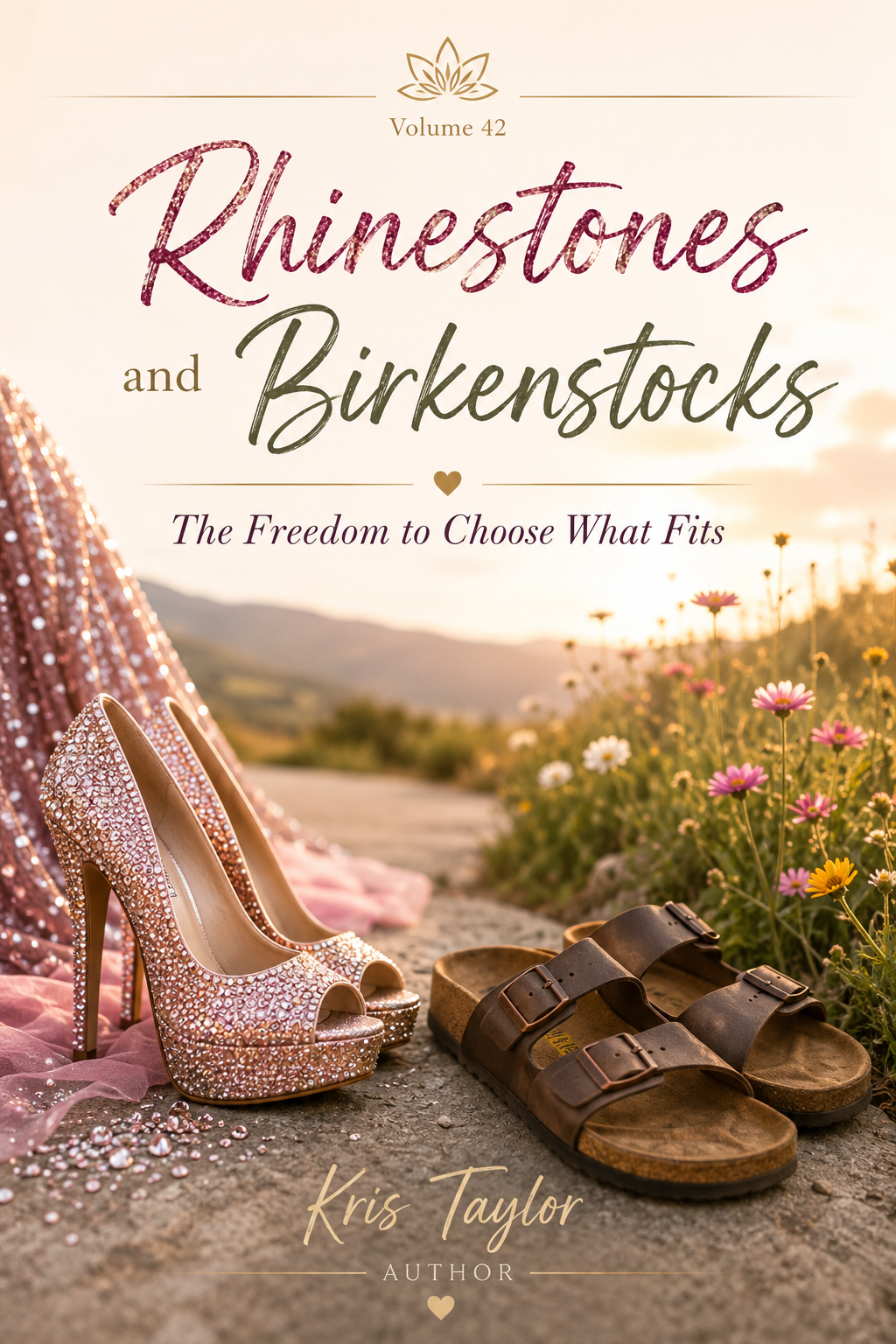


It was a typical night at the Taylor household. My husband was attentively watching TV, and I was inattentively attending to a host of other things.
And then something caught my attention. Here, on American Ninja Warrior, was a highly accomplished woman competitor who was highlighted, not for her athletic prowess, but because she was running the course in high heels.
The TV had my full attention and my disbelief, my disappointment, and despair. Here, in a place where performance was objectively measured down to the millisecond, was a woman who intentionally wore shoes likely to impede her performance.
I saw a woman competing in high heels and instantly assumed I knew what those heels meant. Immediately, this musing began to take shape. A rant against our perceived need to conform to a standard for dressing that restricted our freedom to move and, at times, breathe.
And then an unexpected event happened that changed my perspective and consequently this musing.
Dolly Parton died.
What followed was an amazing global outpouring of love, admiration, and support for her, her work, and the impact she’s made on the world. From grand gestures like the pink lights that adorned skyscrapers in cities across the world, flags at half-mast, and an avalanche of tributes. All this, alongside others like myself quietly mourning how she, in her very own unique style, embodied using one's talents, gifts, and resources to lift others up.
But what kept running through my mind were her final words about her desire to rest in a bed of cotton after years of wearing the weight of rhinestones. It struck me as similar to the weight many of us carry – of wearing the right thing, no matter how uncomfortable. Of contorting ourselves into Spanx and high heels and high-maintenance hairstyles because that is what we were taught.
And although I planned to write about high heels rather than rhinestones, the theme was the same. It was about how, as women, we are often faced with the binary choice of heels vs. flats. Fashion vs. comfort. Stilted and constrained movement with freedom and ease.
The Ninja woman who snagged my attention is a woman by the name of Jessie Graff. Not only is Jessie a Ninja Warrior, but she is also a martial artist, a championship pole vaulter, and a stuntwoman in major films (which involve high falls, skydiving, and stunt driving.
She is also the inventor of high-heeled athletic shoes, and she ran the course in the equivalent of 4-inch wedge heels. Hero Heels are barefoot shoes with collapsible, non-weight-bearing foam that mimics the look of a 4-inch wedge heel when you lift your toes.
My immediate thought was how ridiculous this was. That here we were again – trading fashion for comfort, contorting our feet into ridiculous positions in the most unlikely of activities – all to conform to a notion that high heels make one seem taller, more slender, and more feminine by societal standards. And here was an accomplished, athletic woman succumbing to the notion that a societal notion of beauty was needed, in spite of her athletic prowess and many accomplishments.
Why do women wear high heels? For beauty. Confidence. Fashion. Status. Sexuality. Fun. Expectation. And sometimes because we simply want to.
No one answer. No one reason. Complexity surfaced.
So I dug deeper and thought rewatching the Barbie movie would yield some insights. For in this movie, Barbie awakens one day in Barbieland, her perfectly pink world of pure fantasy. Everyone is happy. Things work. Women can be whatever they want to be with the accompanying fashionable clothing and accessories.
On the day Barbie awakens with flat feet, not the frozen tiptoe that allows her to slide into all her glamorous high heels, her “perfect pink” world collapses. She must choose between her pink stiletto mules and brown Birkenstocks, between her fantasy world and the real world. She is torn between her manufactured world and the messy, patriarchal, yet authentic world. It’s not an easy journey.
She seeks out Weird Barbie, the antithesis of Stereotypical Barbie. Stereotypical Barbie is perfect in all ways; Weird Barbie is, well, weird. Her hair is chopped and askew. Her clothing is colorful yet mismatched. Her face is covered with crayon and marker lines, not flawless makeup.
Weird Barbie’s feet are flat, grounded to the real world, which is messy and human and self-actualized. She does not wear stilettos; she wears brown Birkenstocks.
As Dolly showed us. She could be Rhinestones and big hair and bright lights. Dolly didn't need to abandon rhinestones, heels, big hair, glamour, or femininity to become authentic. They weren't necessarily evidence that she had surrendered to cultural expectations. They became part of her creative expression.
She never glossed over the messiness of the real world. She never forgot her beloved community in Tennessee, where she brought both hope and jobs. The lessons from her illiterate dad about education were the impetus for providing 332 million books into the hands of children, irrespective of means.
And once again, I reflect on the words of Dolly Parton’s nephew, Bryan Seaver, as he revealed in the announcement of her death that she had told him she wanted to be buried in a “beautiful bed of plush cotton” because, after a life “wearing heavy rhinestones,” she finally deserved to be comfortable and have some rest
Maybe the problem was never the high heels. Maybe the problem was believing there was only one right kind of shoe for a woman to wear. Freedom isn't choosing Birkenstocks over stilettos. Freedom is being able to choose either—and knowing why we're choosing them.
Dolly chose rhinestones and high heels with intention – to make a point, to further her performances. Yet the love that got expressed for Dolly in this past week exemplifies that Dolly also chose rhinestones to empower herself and her art – and that also enabled her to empower so many along the way.
Dolly chose the shoes she wanted to wear – and while they may have been uncomfortable, they were also fun and fashionable and funky and festive. And they were uniquely hers, pulled off with confidence, kindness, and a humility that endeared her to her many fans.
So maybe it is a “yes and”. That we can choose to own our own style, allowing ourselves the freedom to pick the shoe that serves us well. At times that may be showy or quirky or fun or fashionable. And at other times, grounded solidly on the earth, sensible, comfortable, easy to wear and to move.
Perhaps the question isn't whether we wear stilettos or Birkenstocks. Maybe it's whether we know why we've chosen them.
Are they ours—or something we learned we were supposed to wear?
Because there are days for rhinestones and days for cotton. Days for four-inch heels and days for bare feet planted firmly on the earth.
You're invited to subscribe to Ripples a soulful weekly newsletter crafted to nourish your inner knowing and spark meaningful insights. Each issue includes a short musing, reflection questions, and handpicked resources for your journey. If you're ready to reconnect, reflect, and rise in community with other spirit-led women, join us—and let the ripples begin.
Join my Ripples Newsletter
Exploring the places that tend to silence us: the Patriarchy at Work, at Home, at the Doctor’s Office, at the Gym, at Church or at the Car Dealership.
Read this musing
It’s been a hell of a day. I’m finally seventy miles in the air on a flight to D.C., then on to Indy — finally being the keyword.I’d spent the day in Savannah, Georgia, wrapping up a client’s strategic retreat. The plan was simple: finish by 4:30, get to the airport, and two-hop home to Indy by midnight. That was the plan — until it wasn’t.
Read this musing
Discover the hidden cost of “sacrifice syndrome” — the pattern of giving endlessly while neglecting yourself. Learn how renewal restores clarity, joy, and sustainable service.
Read this musing
Receive weekly insights from my years of lived experience as a creative, entrepreneurial woman stepping into my gifts and passions.
Join my Ripples Newsletter